If your dog has eaten something toxic, call your vet now.
Do not wait for symptoms. Ring your own vet, or an out-of-hours emergency vet, straight away. Have ready what they ate, roughly how much, and when. Do not try to make your dog sick unless a vet tells you to. In the UK you can also call the Animal PoisonLine on 01202 509000 for advice (a paid service), but your vet always comes first.

Puppies are curious, low to the ground and small, which makes a dropped grape or a square of chocolate far more dangerous for them than for a grown dog. The good news is that most cases are avoidable. Learn the short list of foods that do real harm, keep them out of reach, and act fast if your puppy gets to one.
The most dangerous foods
These are the ones worth memorising. For grapes and xylitol especially, there is no known safe amount:
- Chocolate. Contains theobromine and caffeine, which dogs cannot clear the way we do. The darker the chocolate the worse it is: dark and baking chocolate are the most dangerous, white the least.
- Grapes, raisins, sultanas and currants. Can cause sudden kidney failure, with no known safe dose. Watch for hidden sources like mince pies, fruit cake, hot cross buns and some cereals.
- Xylitol (birch sugar). A sweetener in sugar-free gum, mints, some peanut butters and baked goods. It triggers a dangerous drop in blood sugar and can cause liver failure, even in small amounts. Always check labels before sharing human food.
- Onions, garlic, leeks and chives. Damage red blood cells and cause anaemia, whether raw, cooked, or as powders and gravy. The effect builds up over time, so small repeated amounts add up.
- Macadamia nuts. Cause weakness, wobbliness, tremors and a raised temperature. Rarely fatal, but a clear reason to call the vet.
- Alcohol and raw bread dough. Alcohol is toxic in small amounts, and raw dough carries on rising in the warm stomach, producing alcohol and painful bloating.
- Caffeine. Coffee, tea, energy drinks and cocoa. Dogs are far more sensitive to it than we are.
- Blue cheese. Ripe blue cheeses like Stilton contain a substance called roquefortine C that can cause tremors and seizures.
Not toxic, but still dangerous: cooked bones splinter and cause blockages or tears, corn cobs are a classic cause of gut obstruction, and avocado brings a large stone that can choke or block, plus a lot of fat. Keep these out of reach too.
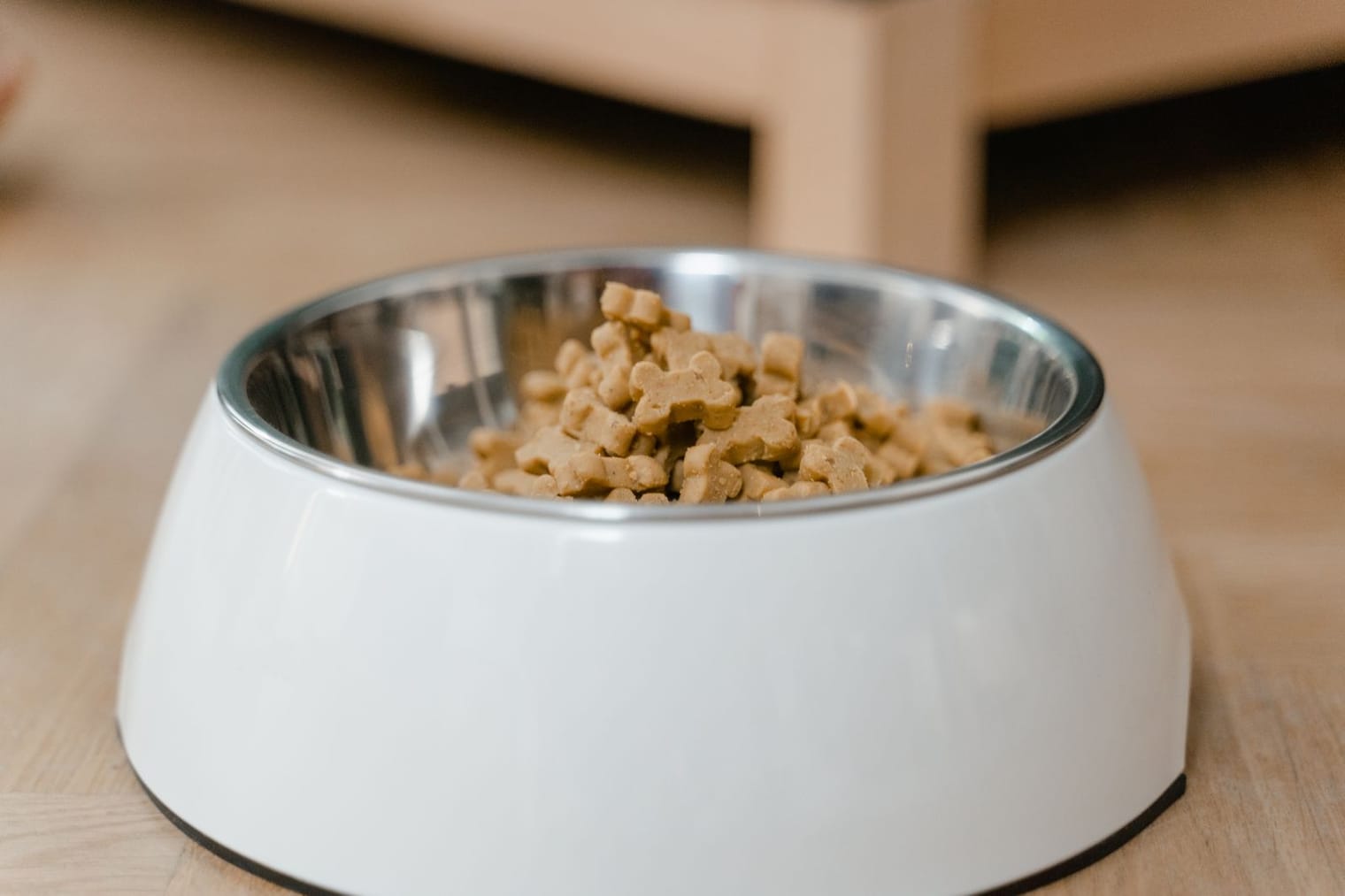
Why puppies are extra at risk
A toxic dose is about body weight, and a puppy weighs a fraction of an adult dog, so a much smaller amount does harm. Puppies also explore everything with their mouths and have not yet learned what to leave alone. Bins, handbags, coffee tables and visitors' pockets are the usual culprits. A little puppy-proofing goes a long way, and our new puppy checklist covers the basics.
Signs your dog may have been poisoned
Signs vary by food, but common ones include:
- Vomiting or diarrhoea
- Drooling or unusual lip-licking
- Wobbliness, tremors or twitching
- Unusual tiredness or weakness
- A racing heart or fast breathing
- Seizures or collapse
Do not wait for symptoms to appear. Many poisons do their damage before a dog looks unwell, so the safest response is to call your vet the moment you know something has been eaten.
What to do if your puppy eats something toxic
- Call your vet straight away, or an out-of-hours emergency vet. Do not sit and watch to see what happens.
- Have the details ready: what they ate, roughly how much, when, and your puppy's weight. Keep the packaging if you have it.
- Do not try to make your puppy sick unless a vet tells you to. For some substances, bringing it back up causes more harm.
- Skip the home remedies. Milk, salt and food do not dilute a poison. Follow the vet's instructions only.
Foods that are safe as treats
Plenty of everyday foods are fine in small amounts, which makes them useful training treats:
- Plain cooked chicken or turkey, with no bones, skin or seasoning
- Carrot, cucumber and green beans
- Apple without the core or pips
- Blueberries
- Plain cooked pumpkin
Introduce new foods one at a time and in small amounts, and keep treats under about 10% of daily calories. Our feeding guide and feeding calculator cover the daily total.
Not sure if something is safe? Vivlo's Ask Pip can talk you through common foods and what to watch for, day or night. It is general guidance, never a substitute for your vet, and it will always tell you when a food means picking up the phone.
See how it worksCommon questions
What foods are most toxic to dogs?
The most dangerous are chocolate, grapes and raisins, xylitol (a sweetener), onions and garlic, macadamia nuts, and alcohol or caffeine. For grapes and xylitol there is no known safe amount. Keep all of these out of reach, and call your vet straight away if your dog eats any.
My dog ate chocolate, what should I do?
Call your vet now, and have ready the type of chocolate (dark, milk or white), roughly how much, and your dog's weight. Dark and baking chocolate are the most dangerous. Do not wait for symptoms, and do not try to make your dog sick unless a vet tells you to.
Are grapes and raisins toxic to dogs?
Yes. Grapes, raisins, sultanas and currants can cause sudden kidney failure, and there is no known safe amount. This includes foods that contain them, like mince pies, fruit cake and some cereals. Treat any amount as an emergency and call your vet.
What is xylitol and why is it dangerous to dogs?
Xylitol, also labelled birch sugar, is a sweetener found in sugar-free gum, mints, some peanut butters and baked goods. Even small amounts can cause a dangerous drop in a dog's blood sugar and liver damage. Always check labels before sharing human food, and call your vet if your dog eats any.
What human foods are safe for puppies?
In small amounts, plain cooked chicken or turkey, carrot, cucumber, green beans, apple without the core or pips, and blueberries are usually fine as occasional treats. Keep treats under about 10% of daily calories, introduce new foods one at a time, and check anything you are unsure about.
How much of a toxic food is dangerous?
It depends on the food, your dog's size and the amount, and for some, like grapes and xylitol, even a small amount can be serious. Puppies are at higher risk because they are small. Do not try to judge it yourself: if your dog has eaten something toxic, call your vet.
What are the signs of poisoning in a dog?
Common signs include vomiting, diarrhoea, drooling, wobbliness, tremors or twitching, unusual tiredness, a racing heart, or seizures. Some poisons act before any signs show, so do not wait for symptoms. If you think your dog has eaten something toxic, call your vet straight away.