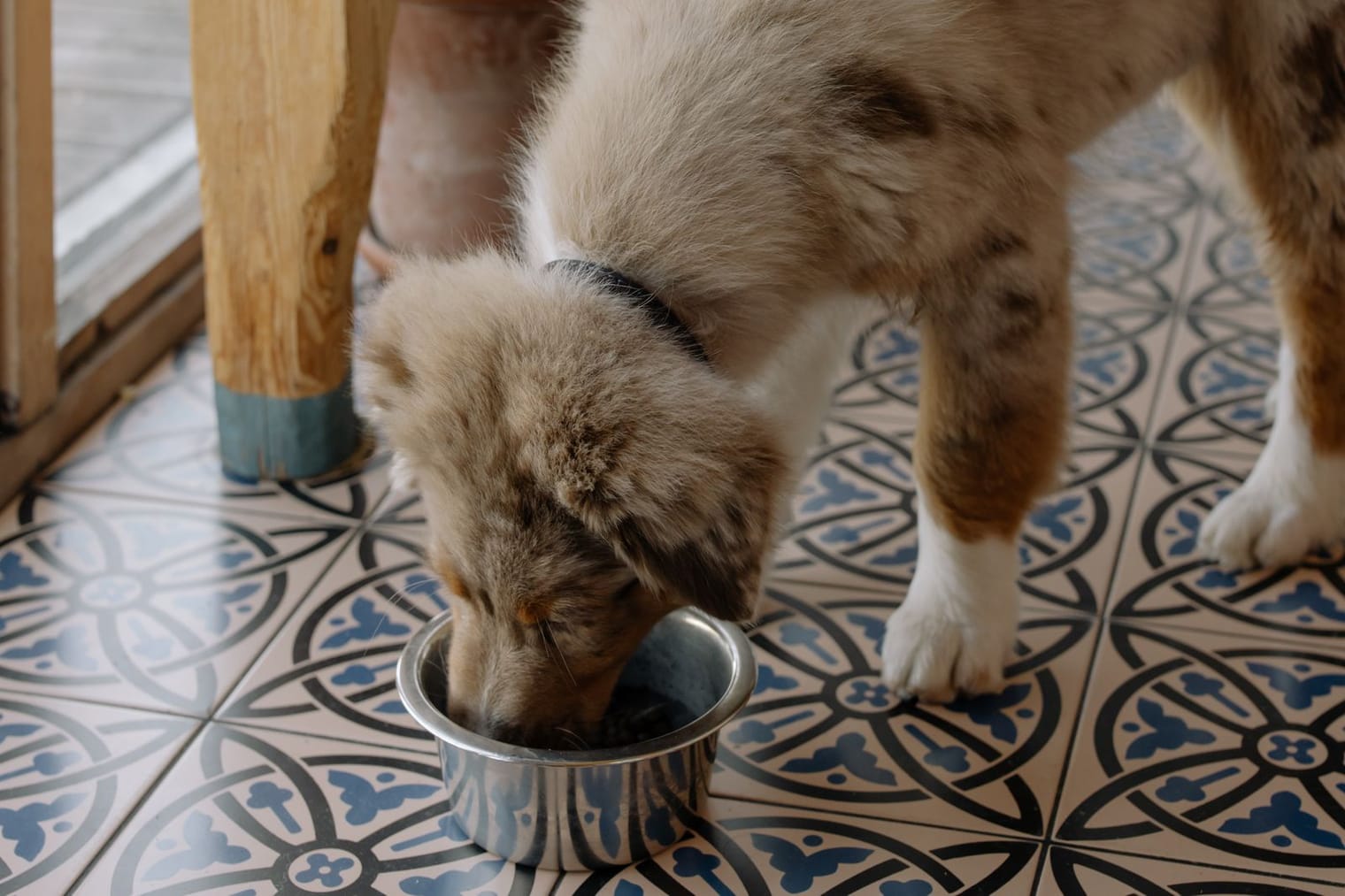
Puppy food is built for growth: more calories, more protein, and a careful calcium to phosphorus balance for developing bones. Once your dog is nearly fully grown, that richness is no longer needed and starts to show up as extra weight. The trick is switching at the right time for your dog's size, then changing food slowly so their stomach keeps up.
Why the timing matters
Puppy food is deliberately energy dense and nutrient rich to fuel fast growth. Adult food has fewer calories and a different balance of nutrients for a body that is no longer growing. Switch too early and a still-growing puppy can miss out on what they need for bones and muscle. Switch too late and a fully grown dog keeps eating growth-level calories, which usually shows up as extra weight. Getting the timing right is really about spotting when growth is finishing.
When to switch, by adult size
Bigger dogs grow for longer, so they stay on puppy food later. As a rough guide:
- Small breeds (up to about 10kg): around 9 to 12 months.
- Medium breeds (about 10 to 25kg): around 12 months.
- Large breeds (about 25 to 45kg): around 12 to 18 months.
- Giant breeds (45kg and over): not until 18 to 24 months.
Large and giant breeds matter most here. Their bones grow for a long time, and moving them off large-breed puppy food too early, or overfeeding, can affect how their joints develop. If you are not sure how big your puppy will get, our guides on how big your puppy will get and when puppies stop growing can help you place them.
Signs your puppy is ready
Age is a guide, but your own dog tells you more. Common signs the time is near:
- Their growth has clearly slowed or stopped, and weight has levelled off.
- They are at or close to their expected adult weight.
- They seem less ravenous, or start leaving food.
- They are gaining a little too much fat on puppy food.
If you track weigh-ins, a growth curve that has flattened out is one of the clearest signals. When in doubt, your vet can confirm whether your dog has finished growing.
How to switch, step by step
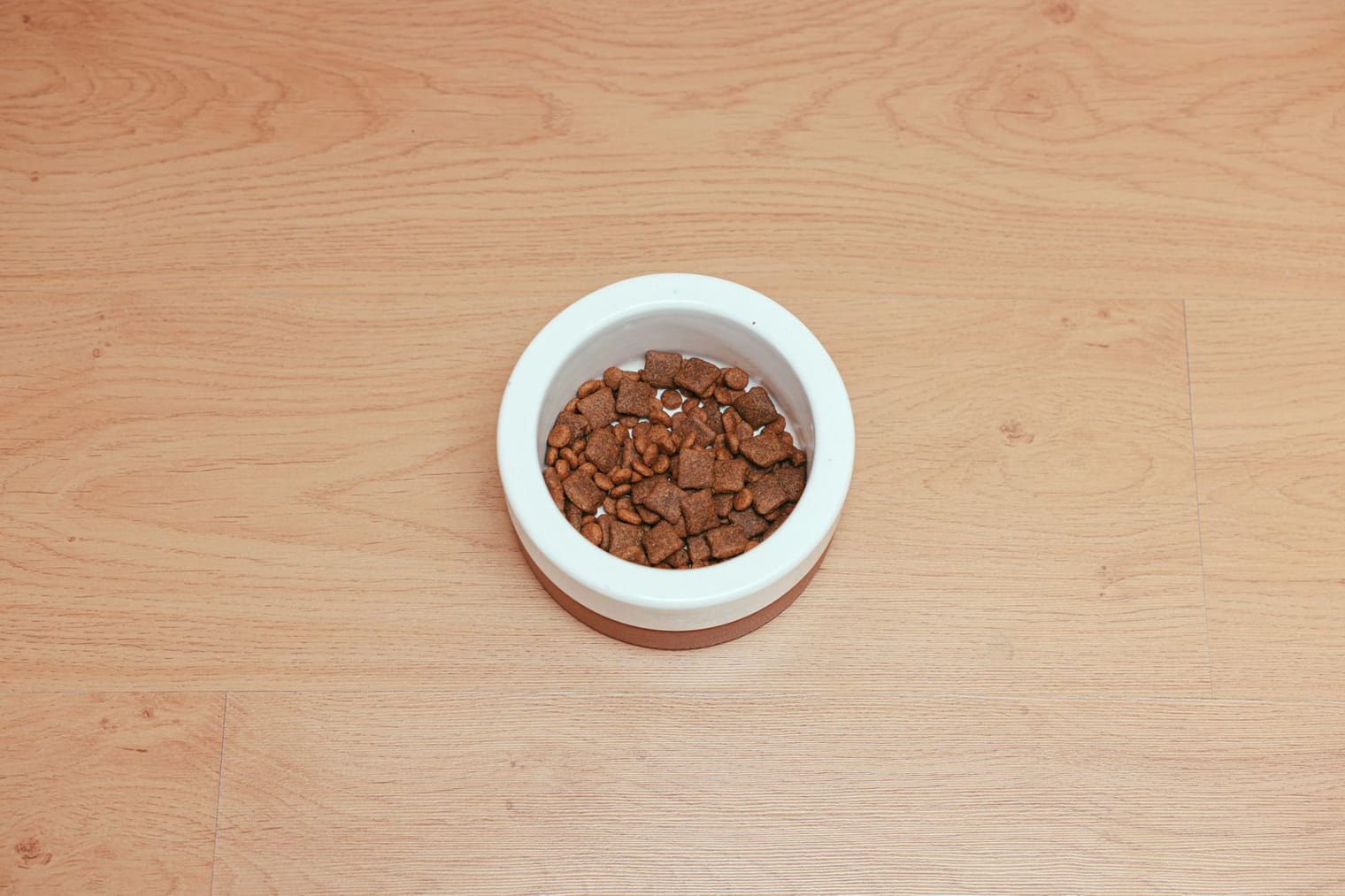
A sudden change of food is the classic cause of an upset stomach. Make the switch gradually over about seven to ten days, mixing the new adult food in with the old puppy food:
- Days 1 to 3: about a quarter new food, three quarters old.
- Days 4 to 6: roughly half and half.
- Days 7 to 9: about three quarters new food, one quarter old.
- Day 10: fully on the new adult food.
Keep an eye on their stools through the change. If they go loose, hold at the current mix for a couple of extra days before moving on, rather than pushing ahead.
How much adult food to feed
Adult dogs need fewer calories per kilo than growing puppies, so portions usually change at the same time. Start from the feeding guide on the new food's packaging for your dog's weight, then adjust to keep them at a healthy body condition: you should be able to feel their ribs easily without a layer of fat over them. Most adult dogs do well on two meals a day. Our feeding guide and feeding calculator explain how to work out the daily amount.
What if my dog will not eat the new food?
Some dogs take to a new food straight away, others need coaxing. If yours is fussy or their stomach is unsettled, slow the change right down, mix the new food in more gradually, and try warming it slightly or adding a little warm water to bring out the smell. Sticking to the adult version of the same brand your puppy already ate can make the change smoother. A short bout of loose stools during a switch is common, but vomiting, ongoing diarrhoea, or a dog who will not eat at all for more than a day means a call to your vet.
Do I have to change food at all?
You do need to move off puppy food eventually, because its richness leads to weight gain in a grown dog, but you do not have to change brand. Most ranges have a matching adult formula, and large breeds have their own large-breed adult food worth choosing. If your dog is thriving, keeping the same brand and stepping up to its adult line is the simplest, gentlest switch.
Not sure if your puppy has finished growing? Vivlo tracks your dog's weight and shows when the growth curve levels off, which is the clearest sign it is time to switch. Ask Pip can also suggest the right timing for your breed and size. It is friendly general guidance, never a substitute for your vet.
See how it worksCommon questions
When should I switch my puppy to adult dog food?
It depends on adult size, not age alone. Small breeds usually switch around 9 to 12 months, medium breeds around 12 months, large breeds 12 to 18 months, and giant breeds not until 18 to 24 months. The best signal is that growth has slowed and weight has levelled off near their adult size.
What happens if I switch too early or too late?
Switch too early and a still-growing puppy can miss the extra calories and nutrients they need for healthy bones and muscle. Switch too late and a fully grown dog keeps eating growth-level calories, which usually leads to weight gain. Matching the timing to your dog's size and growth avoids both.
How do I change my puppy to adult food without upsetting their stomach?
Change over gradually across about seven to ten days. Start with roughly a quarter new food, then move to half, then three quarters, then fully onto the adult food, mixing it in with the old. Watch their stools, and if they go loose, hold at the current mix for a day or two before moving on.
Do large breed puppies switch to adult food later?
Yes. Large and giant breeds grow for much longer, so they stay on large-breed puppy food until around 12 to 18 months, and giant breeds until 18 to 24 months. Moving them off too early, or overfeeding, can affect how their joints develop, so timing matters most for big dogs.
How much adult food should my dog eat?
Adult dogs need fewer calories per kilo than puppies. Start from the feeding guide on the new food's packaging for your dog's weight, then adjust to keep them at a healthy body condition where you can feel the ribs easily. Most adult dogs do well on two meals a day.
Can I keep feeding puppy food to an adult dog?
No, not long term. Puppy food is richer than a grown dog needs and leads to weight gain over time. You do not have to change brand, though: most ranges have a matching adult formula, so you can step up to the adult line of the food your puppy already eats.