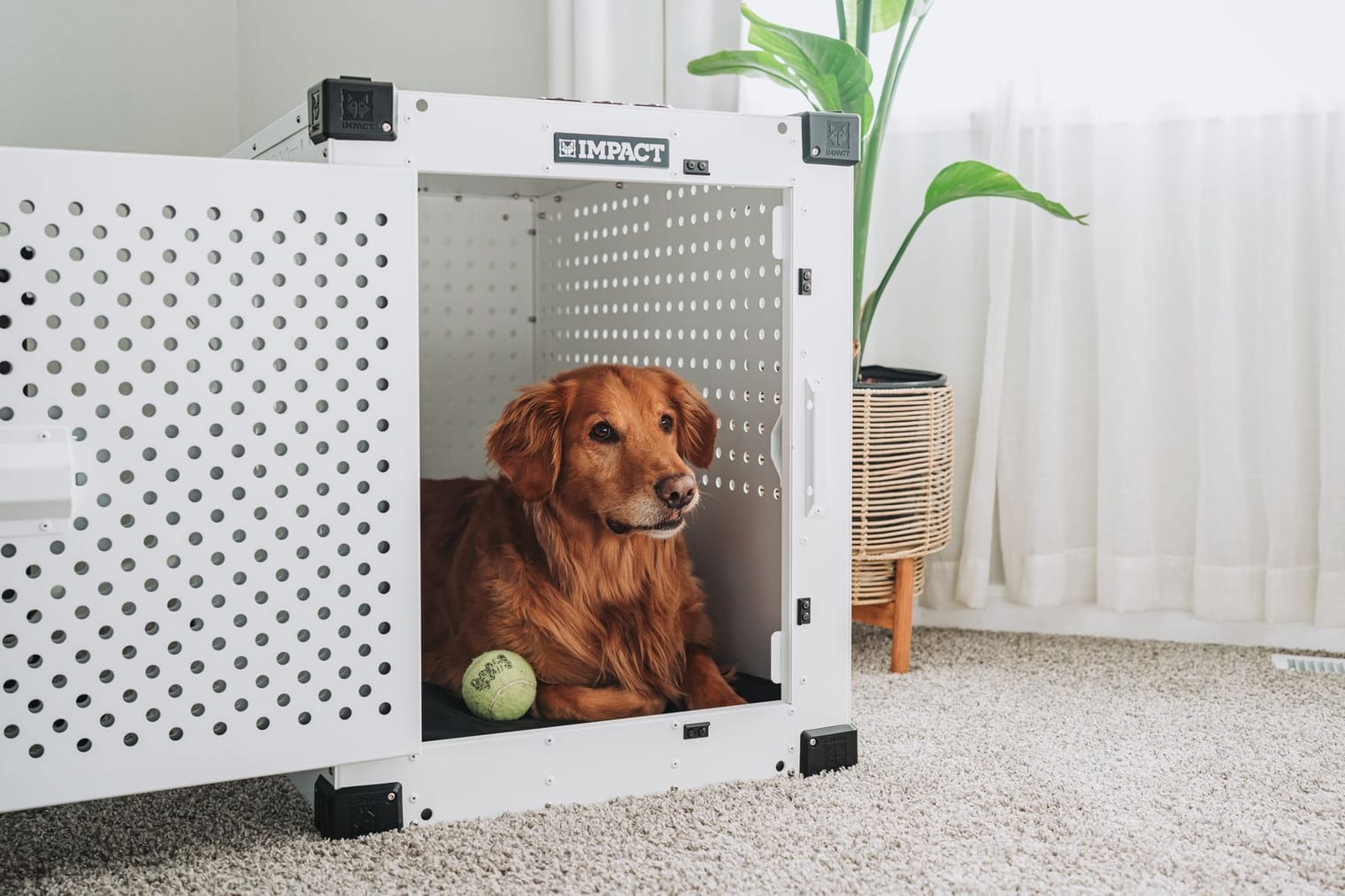
Dogs are den animals, and a crate gives your puppy a small space that is theirs alone. Used kindly it is one of the most useful tools you have: it speeds up toilet training, keeps your puppy safe when you cannot watch them, and helps them learn to settle. The whole thing rests on one rule, the crate is for security, never for punishment.
Why crate training helps
Used kindly, a crate speeds up toilet training, because puppies avoid soiling where they sleep. It keeps them safe when you cannot watch them, helps them learn to settle and sleep, and makes car trips and vet visits far less stressful. It gives an over-tired puppy somewhere calm to switch off, which heads off a lot of bad behaviour. None of that works if the crate ever feels like a punishment, so keep every experience of it positive.
Choosing the right crate
Size matters more than anything. Your puppy should be able to stand up, turn around and lie down comfortably, but no bigger. Too much space and they will happily toilet in one corner and sleep in another, which undoes the toilet-training benefit.
- Buy for their adult size, with a divider. A crate that grows with them saves money. Use the divider to keep the space puppy-sized, then move it back as they grow. Our guide on how big your puppy will get helps you plan ahead.
- Wire or plastic. Wire crates fold flat, have good airflow and take a divider. Plastic crates feel more enclosed and den-like. Either works.
- Make it cosy. Add soft bedding, and drape a blanket over part of the crate so it feels snug. Keep a safe chew inside, and take collars off so nothing can snag.
- Place it well. A quiet corner of a room the family actually uses, not shut away alone. Puppies want to be near you.
Make the crate a happy place
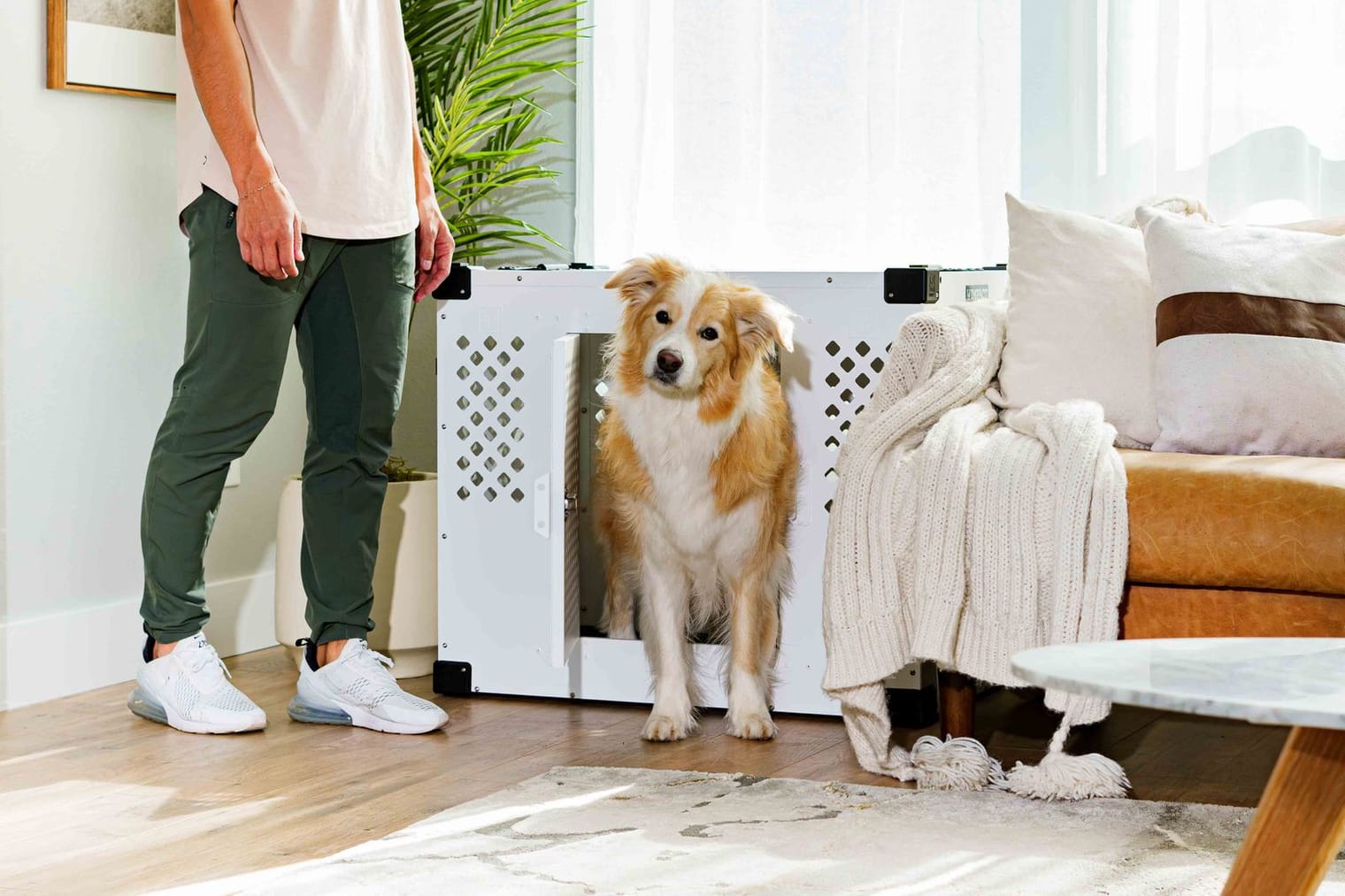
Never bundle a puppy in and shut the door on day one. Let them choose to go in, and pair the crate with good things:
- Leave the door open and drop a few treats inside so they wander in to find them.
- Feed their meals in the crate, bowl at the back, so they walk right in.
- Give a special chew or stuffed toy that only ever appears in the crate.
- Praise softly whenever they settle inside, and never force or drag them in.
At this stage you are simply building the idea that the crate is the best spot in the house. Take a few days over it.
Building up time
Once your puppy happily goes in, start closing the door for a few seconds while you sit beside them, then open it before they fuss. Build up slowly:
- Close the door for a few seconds, then a minute, rewarding calm.
- Step away, then leave the room for short spells and come back before they panic.
- Always let them out during a quiet moment, not mid-cry, so they do not learn that crying opens the door.
Go at their pace. If they get anxious, you have moved too fast, drop back a step and build up more gently.
The crate at night
For the first week or two, put the crate right by your bed so your puppy is not alone in the dark. They can hear and smell you, which settles them. Expect some crying the first few nights, it fades. Very young puppies cannot hold their bladder overnight, so a whimper may be a genuine toilet need: take them out calmly, with no play or fuss, then straight back to the crate. Our guide on toilet training covers the night-time routine.
How long is too long?
A crate is a short-term resting place, not somewhere to leave a puppy for hours. A rough guide to how long a puppy can hold their bladder is their age in months plus one, in hours, up to a maximum of around four to five hours for an older puppy. So an eight-week-old should not be crated more than an hour or two in the day. Never crate a puppy all day while you are out. If your days are long, arrange a break: a person, a playpen, or a dog walker.
Mistakes to avoid
- Using it as punishment. The crate must always mean safety and calm, or the whole thing falls apart.
- Going too fast. Rushing the early steps creates fear. Slow is quicker in the end.
- A crate that is too big. It undoes the toilet-training benefit.
- Letting them out mid-cry for no reason. Wait for a pause, unless it is a genuine toilet need.
- Leaving a collar on. Tags and collars can catch on the crate, so take them off first.
When can they stop using the crate?
There is no rush to stop. Many dogs keep their crate for life as a comfy retreat, with the door left open. Others graduate to a normal bed once they are reliably house-trained and can be trusted not to chew the house, often somewhere after the first year. Let your own dog show you when they are ready.
Settling into a routine? Vivlo helps you build the daily rhythm that makes crate and toilet training click: logging sleep and toilet trips, spotting the pattern, and nudging you at the right times. Ask Pip can talk you through a crate plan for your puppy's age. It is friendly general guidance, never a substitute for your vet.
See how it worksCommon questions
How long does it take to crate train a puppy?
It varies, but most puppies are comfortable with a crate within a few days to a couple of weeks if you go slowly and keep it positive. The early steps, letting them choose to go in and feeding meals inside, matter most. Rushing creates fear and sets you back, so let your puppy set the pace.
Should I let my puppy cry it out in the crate?
Not in the harsh sense. Ignoring genuine distress can make crate fear worse. Instead, avoid letting them out at the exact moment they cry for attention, wait for a brief pause so they do not learn that crying opens the door. But a young puppy crying at night often needs a toilet trip, so take them out calmly, then settle them back.
How long can a puppy stay in a crate?
Only for short stretches. A rough guide is their age in months plus one, in hours, up to about four to five hours for an older puppy. An eight-week-old should not be crated more than an hour or two in the day. Never leave a puppy crated all day while you are out.
Where should I put the crate at night?
For the first week or two, put the crate right beside your bed. Your puppy can hear and smell you, which helps them settle and lets you hear when they need a night-time toilet trip. Once they are sleeping soundly, you can gradually move it to where you want it to live.
What size crate does a puppy need?
Big enough to stand up, turn around and lie down comfortably, and no bigger. Too much room lets them toilet in one corner and sleep in another. Buy a crate for their adult size and use a divider to keep the space puppy-sized as they grow.
Is crate training cruel?
No, when it is done kindly. A crate taps into a dog's natural liking for a small, safe den and gives them a secure place to rest. It becomes cruel only if it is used as punishment or a puppy is shut in for too long. Kept positive and used for short periods, most dogs come to love their crate.