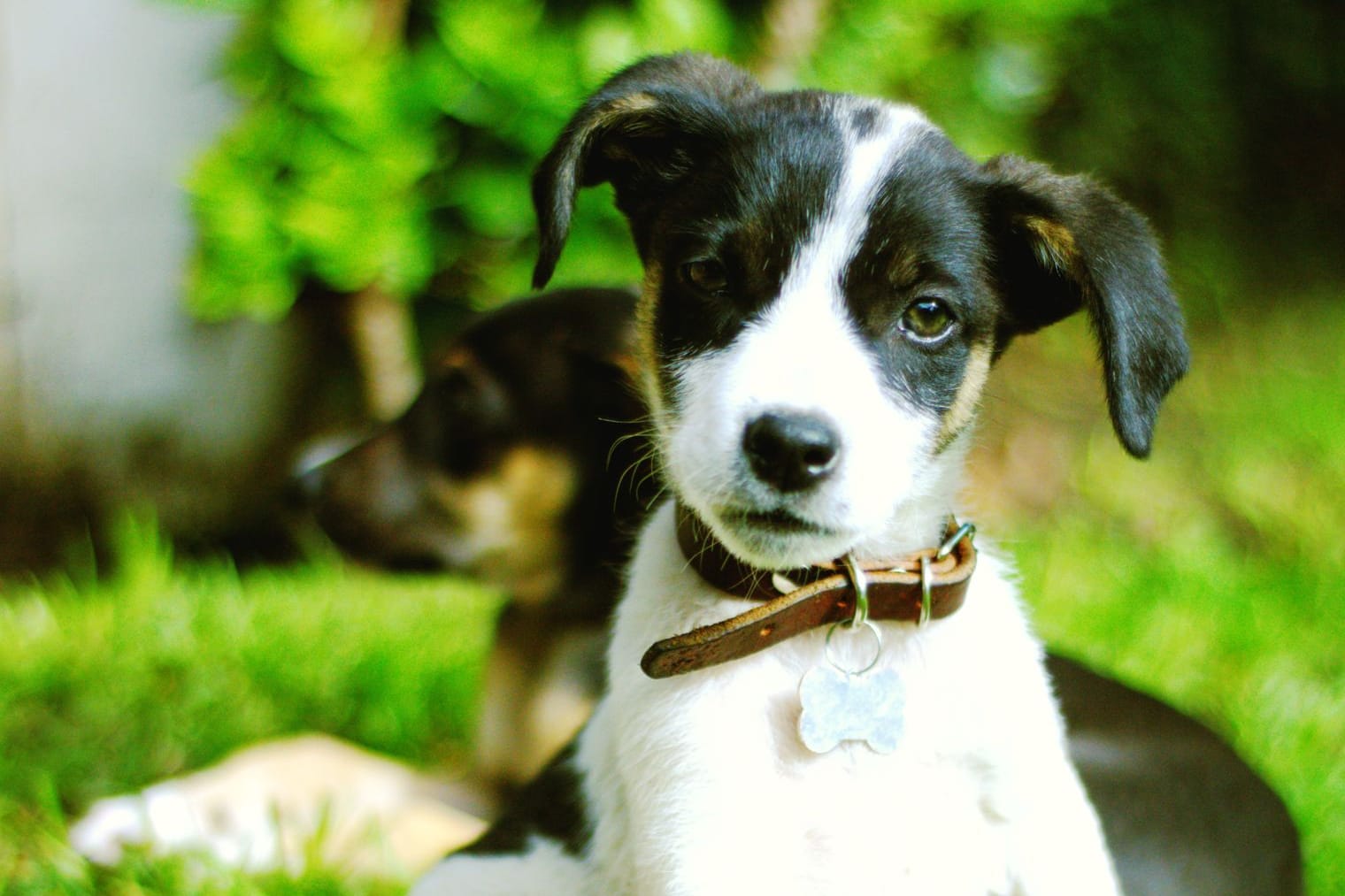
The short version: you take your puppy outside before an accident happens, reward the outside win the moment it happens, and say nothing when you miss one. Repeat that at every high-risk moment for three to six weeks and most puppies get there. It's not clever, and that's exactly why it works.
Why this actually works
A puppy doesn't arrive knowing outside is the right place to go. They learn it the same way they learn everything else, through what gets rewarded. Make a fuss when they go outside and you've just paid them for the right choice. Miss an accident indoors and they've practised the wrong one instead, with nobody there to redirect them. Practice builds the habit either way; the job is making sure the outside version happens far more often than the indoor one gets the chance to.
The high-risk moments
A puppy's bladder gives very little warning. The way to win isn't watching for a sign, it's being outside before they need to go. These are the moments an accident is most likely:
- Straight after waking, even from a short nap.
- 10 to 30 minutes after eating.
- After play, and after chewing something.
- Roughly every hour in between, while they're young.
Cover those moments consistently and most accidents never get the chance to happen.
How to actually do it
- Go outside with them. Not to the back door, into the garden itself. You can't reward a moment you didn't see.
- Wait quietly. No chatting, no fussing, no toys. It should be boring, so there's nothing to do but the thing you're waiting for.
- Reward the second they finish. Praise and a treat on the spot, not back in the kitchen. Timing is what makes the connection; a reward two minutes later just rewards whatever they're doing two minutes later.
- Repeat at every high-risk moment for three to six weeks. There's no shortcut through the repetition, only through consistency.
When accidents happen
Say nothing, clean it up, and supervise more closely next time. A puppy can't connect a telling-off to something that happened minutes earlier, so it doesn't teach them not to go indoors. What it does teach them is that going near you afterwards is risky, and that's how puppies learn to sneak off behind the sofa instead of coming to find you.
Clean up with an enzymatic cleaner rather than a standard household disinfectant. Ordinary cleaners can leave a residual smell that a puppy's nose still reads as a toilet spot, inviting a repeat in the same place. Enzymatic cleaners break the actual scent markers down.
Two shortcuts that aren't
Puppy pads. They teach a puppy that indoors, on something soft, is fine, a lesson that generalises to rugs and carpets more often than owners expect. Skip them if trips outside are realistic at all.
Punishment. It adds the sneaking-off problem above, and an anxious puppy is harder to toilet train, not easier, because the whole method depends on you being able to watch them.
What's actually normal
Most puppies are reliable by four to six months, with accidents becoming rare rather than disappearing overnight. Smaller breeds often take a little longer: smaller bladders and a faster metabolism relative to their size mean more frequent trips out, not a slower learner. Overnight is usually the last piece to click into place, so a late supervised trip and an early morning one, for longer than daytime training takes, is normal.
One accident after weeks of reliability isn't worth worrying about. Puppies have off days too.
When to call the vet
A puppy who was reliably trained and suddenly starts having frequent accidents again, especially with straining, blood, or noticeably more frequent trips, needs a vet check before more training. Urinary tract infections are common in young dogs and look identical to a regression from the outside. If the pattern changes suddenly rather than gradually, that's the first call to make.
That's also exactly the kind of change a toilet training log makes obvious. Writing down the time and in-or-out for every trip turns "a lot of accidents lately" into a real pattern, and a real pattern is what tells you a regression is happening at all.
Vivlo learns the pattern for you. Log wees and poos as they happen and Vivlo builds a picture of your puppy's own routine: when accidents cluster, when they've stopped, and a live prediction of the next likely trip.
See how it worksCommon questions
How long does it take to toilet train a puppy?
Most puppies are reliable between four and six months old, with genuine consistency usually reached after three to six weeks of dedicated supervision and reward. Smaller breeds and toy breeds often take a little longer because of their smaller bladders.
Why has my toilet-trained puppy started having accidents again?
A sudden regression after weeks of reliability is often a urinary tract infection rather than a training lapse, especially if there's straining, blood, or more frequent trips. It's worth a vet check before assuming it's a training issue, since infections are common in young dogs and look identical to a regression from the outside.
Should I use puppy training pads?
Generally, no, if trips outside are possible. Pads teach a puppy that indoors, on something soft, is an acceptable place to go, which often generalises to rugs and carpets. Going straight to outside training, even if it means more trips at first, avoids having to un-teach that habit later.
Why shouldn't I tell my puppy off for an accident?
Puppies can't connect a correction to something that happened even a few minutes earlier, so telling them off after the fact doesn't teach them not to go indoors. It does teach them that being near you after going is risky, which leads to puppies hiding to toilet instead of coming to find their owner, making the whole process harder.
Do small breeds take longer to toilet train?
Often, yes. Smaller breeds have smaller bladders and a higher metabolism relative to their size, so they need more frequent trips outside for longer than larger breeds. That's normal and not a sign of a slower learner.
What should I clean up puppy accidents with?
An enzymatic cleaner, not a standard household disinfectant. Ordinary cleaning products can leave a residual scent that a puppy's nose still reads as a toilet spot, inviting a repeat accident in the same place. Enzymatic cleaners break down the actual scent markers.
Is it normal for my puppy to have accidents at night?
Yes, especially in the first few weeks. Bladder control develops gradually, and a young puppy often can't make it through a full night without help. A supervised late trip before bed and one first thing in the morning usually closes the gap within a few weeks.