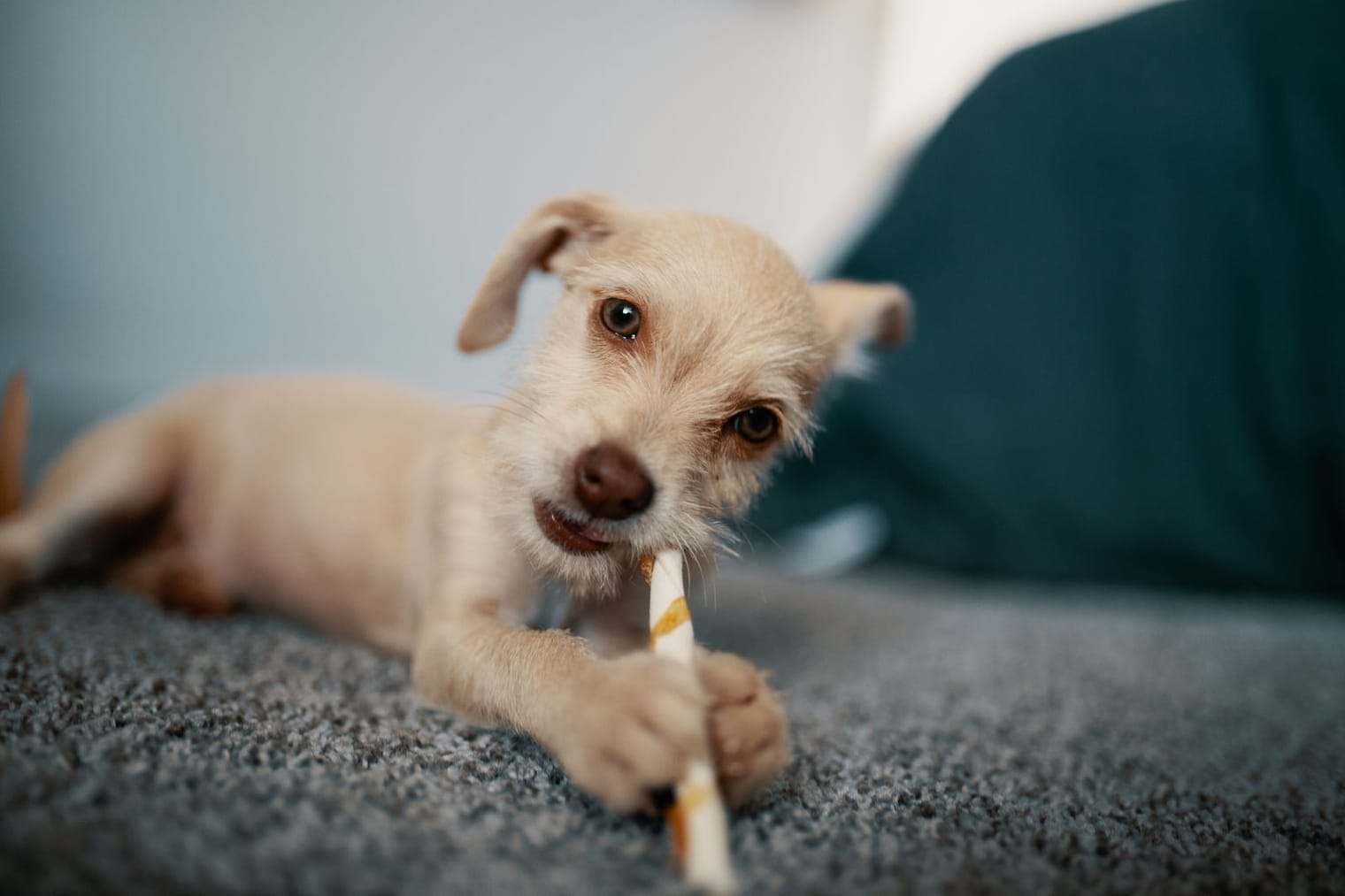
If your puppy has suddenly started chewing everything in sight, teething is usually why. Between about 3 and 6 months, their baby teeth fall out and 42 adult teeth push through, and sore gums make them want to gnaw constantly. It is completely normal, it passes, and there is a lot you can do to make it easier on both of you.
The teething timeline
Teething happens in two waves, and most of the first one is over before your puppy even comes home:
- Birth to about 2 weeks: no teeth at all.
- 3 to 6 weeks: the 28 baby (milk) teeth come through, usually before you get them.
- 12 to 16 weeks (3 to 4 months): the baby teeth start to fall out and adult teeth push through, incisors (the small front teeth) first.
- 4 to 6 months: the rest follow, canines, premolars and molars. By around 6 to 7 months, all 42 adult teeth are usually in.
The chewing tends to peak around 4 to 5 months, when the most teeth are moving at once.
What is normal during teething
Teething is uncomfortable, so expect:
- A big increase in chewing and gnawing, they chew to relieve sore gums.
- More drooling than usual.
- Small spots of blood on toys, or finding a tiny tooth (they often swallow them, which is harmless).
- Red or slightly swollen gums.
- Extra mouthiness and nipping.
All of this settles once the adult teeth are in.
Is my puppy biting because of teething?
Partly. Teething makes the urge to chew and gnaw much stronger, so a teething puppy mouths everything, including you. But puppy biting is also normal play and how they explore the world, teething just turns up the volume. The answer is the same either way: redirect them onto something they are allowed to chew, and never punish it. Our guide on how to stop puppy biting covers the technique.
Safe ways to soothe sore gums
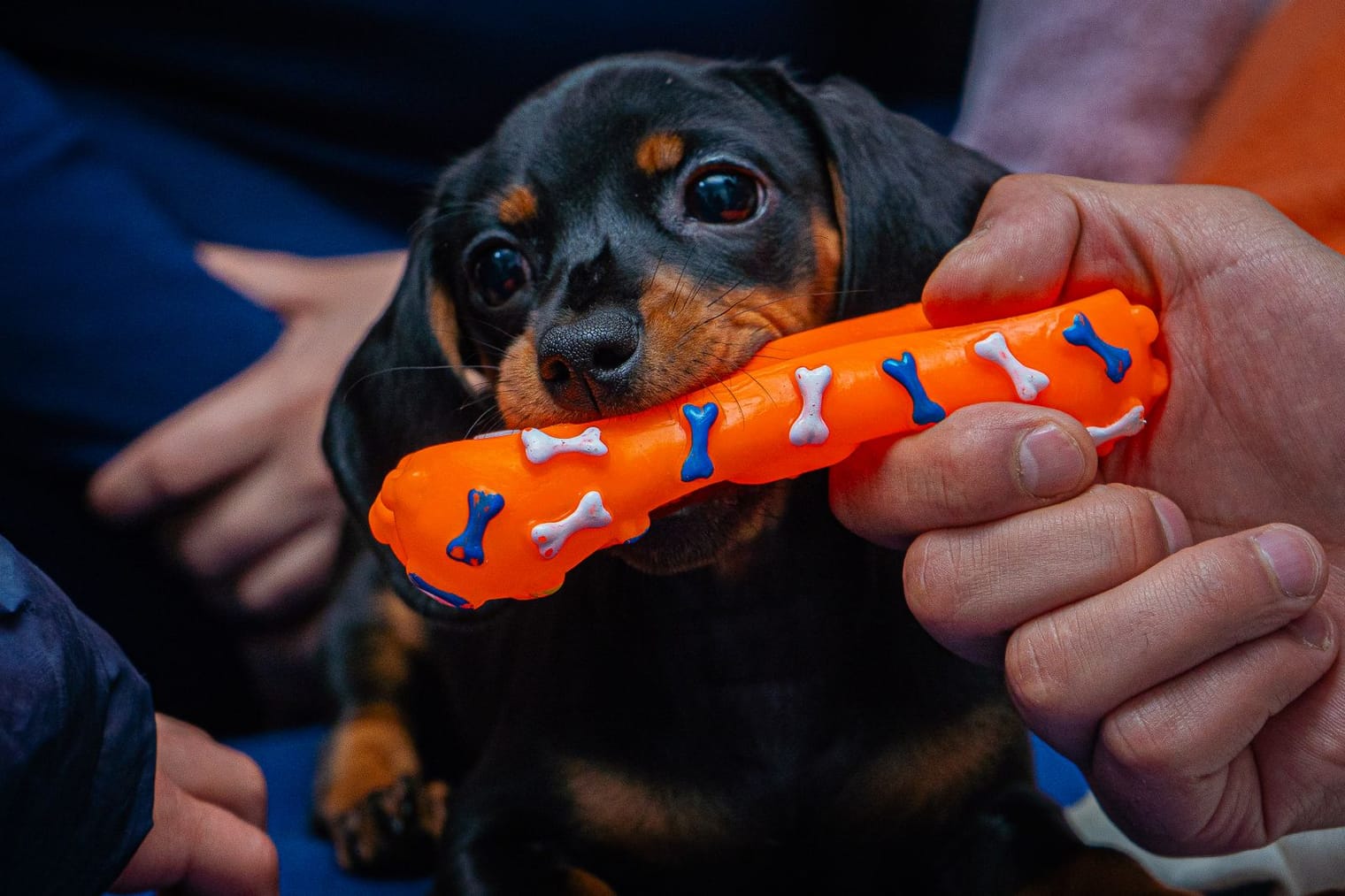
- Offer a range of safe chews. Rubber teething toys and puppy-safe chews give the urge somewhere to go.
- Use cold. Cold soothes sore gums. Try a frozen wet flannel, a frozen carrot, or a chilled rubber toy.
- Redirect, don't tell off. When they chew a hand or the sofa, calmly swap it for a chew toy.
- Puppy-proof. A teething puppy will test everything. Move shoes, cables and anything precious out of reach, our new puppy checklist covers this.
What to avoid
Some popular chews are too hard and can crack a puppy's teeth, or break off and cause a blockage. Steer clear of:
- Antlers, hooves and hard nylon chews, hard enough to fracture teeth.
- Cooked bones, which splinter.
- Rawhide, a common choking and blockage risk.
- Anything small enough to swallow whole.
A good rule of thumb: if you would not want to be hit on the knee with it, it is too hard for their teeth.
Start brushing early
Teething is the perfect time to get your puppy used to having their mouth handled. Introduce a soft puppy toothbrush or finger brush and dog toothpaste (never human toothpaste), a few seconds at a time, paired with praise. Do it now and daily brushing becomes normal for life, which protects those new adult teeth.
When to see the vet
Most teething needs nothing but patience and safe chews. Book a check if you notice:
- A retained baby tooth, a baby tooth still in place beside the adult one, especially the canines. Left in, it can crowd the teeth and trap food, and a vet may need to remove it.
- A broken or chipped adult tooth.
- Gums that are very swollen, bleeding heavily, or clearly painful.
- A puppy who will not eat because their mouth hurts, or has bad breath that could point to infection.
Keeping track of the milestones? Vivlo logs your puppy's firsts and can remind you of the little things that matter now, like starting to brush their teeth. Ask Pip can tell you what is normal at each stage, day or night. It is friendly general guidance, never a substitute for your vet.
See how it worksCommon questions
When do puppies start and stop teething?
Most of it happens between about 3 and 6 months. The 28 baby teeth come in at 3 to 6 weeks, usually before you get your puppy. From 3 to 4 months the baby teeth fall out and adult teeth push through, and by around 6 to 7 months all 42 adult teeth are usually in. Chewing peaks around 4 to 5 months.
How can I help my teething puppy?
Give them plenty of safe things to chew and use cold to soothe sore gums, a frozen wet flannel, a frozen carrot, or a chilled rubber teething toy all help. Redirect chewing from hands and furniture onto a chew toy rather than telling them off, and puppy-proof so they cannot get to anything dangerous.
Is my puppy biting because of teething?
Partly. Teething makes the urge to chew and gnaw much stronger, so a teething puppy mouths everything. But puppy biting is also normal play. Either way the answer is the same: calmly redirect them onto something they are allowed to chew, and never punish it.
What can I safely give a puppy to chew?
Rubber teething toys and puppy-safe chews are ideal, and cold items like a frozen carrot or chilled toy soothe the gums. Avoid anything too hard, such as antlers, hooves, hard nylon chews and cooked bones, which can crack teeth or splinter, and avoid rawhide and anything small enough to swallow.
Should I worry if I find a puppy tooth, or if I do not?
Finding a tiny tooth is completely normal, and not finding any is normal too, puppies usually swallow the baby teeth as they fall out, which is harmless. Small spots of blood on toys are also normal during teething. It all settles once the adult teeth are through.
What is a retained baby tooth, and when does it need the vet?
A retained baby tooth is one that stays in place when the adult tooth is already coming through, most often a canine. It can crowd the adult teeth and trap food, so a vet should check it and may need to remove it. Also see a vet for a broken adult tooth, very swollen or painful gums, or a puppy who will not eat.