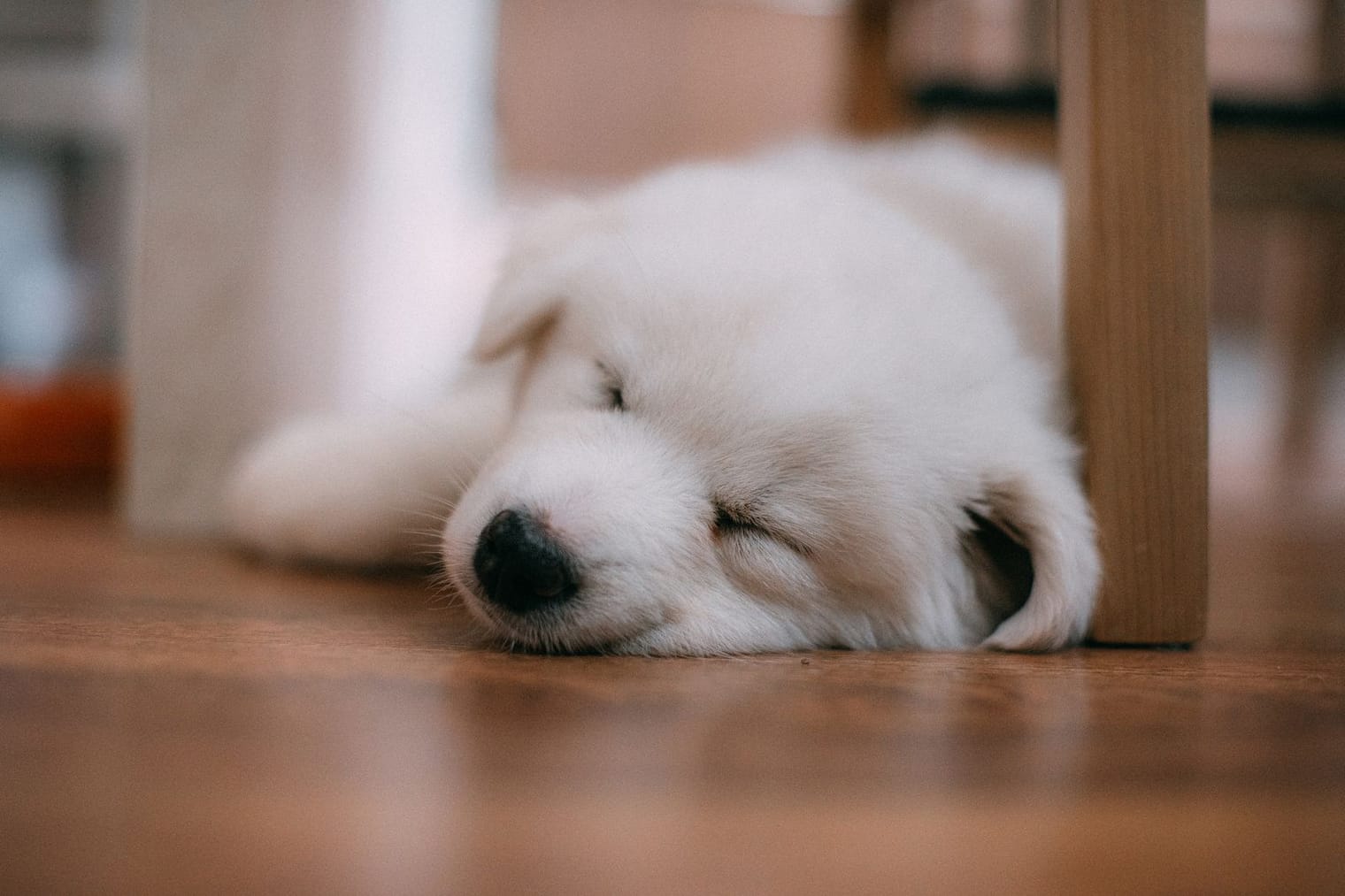
New owners are often surprised by just how much a puppy sleeps, and worried by how wild they are in the hours they are awake. The two are connected. A young puppy needs around 18 to 20 hours of sleep a day, and most of the hyper, bitey behaviour that looks like too much energy is actually the opposite: an over-tired puppy who needs a nap.
How much sleep, by age
Puppies sleep a lot, and it drops only slowly as they grow:
- 8 to 12 weeks: around 18 to 20 hours a day.
- 3 to 6 months: around 16 to 18 hours a day.
- 6 to 12 months: around 14 to 16 hours a day.
- Adult dog: around 12 to 14 hours a day.
That means a young puppy is actually awake for only a few hours across the whole day, in short bursts. Long stretches of activity are not normal or good for them.
Why sleep matters so much
Sleep is when the important work happens. Growth hormone is released during deep sleep, so this is literally when your puppy grows. Their brain also uses sleep to lock in everything they have learned that day, from house training to their name. And like an over-tired toddler, a puppy who does not get enough sleep simply cannot cope: they get cranky, wild and hard to settle.
The hyper, bitey puppy is usually an over-tired puppy
This catches most new owners out. When a puppy misses sleep they do not act sleepy, they act wired: zooming around, biting harder, ignoring you, unable to stop. It looks like too much energy, but it is the opposite. The answer is not more play, it is a nap. Signs your puppy is over-tired rather than under-exercised:
- Sudden frantic zoomies, especially in the evening.
- Nipping and biting that gets worse, not better, the longer they are up.
- Ignoring cues they usually know.
- Whining, or being unable to settle anywhere.
Our guide on how to stop puppy biting covers this link in more detail.
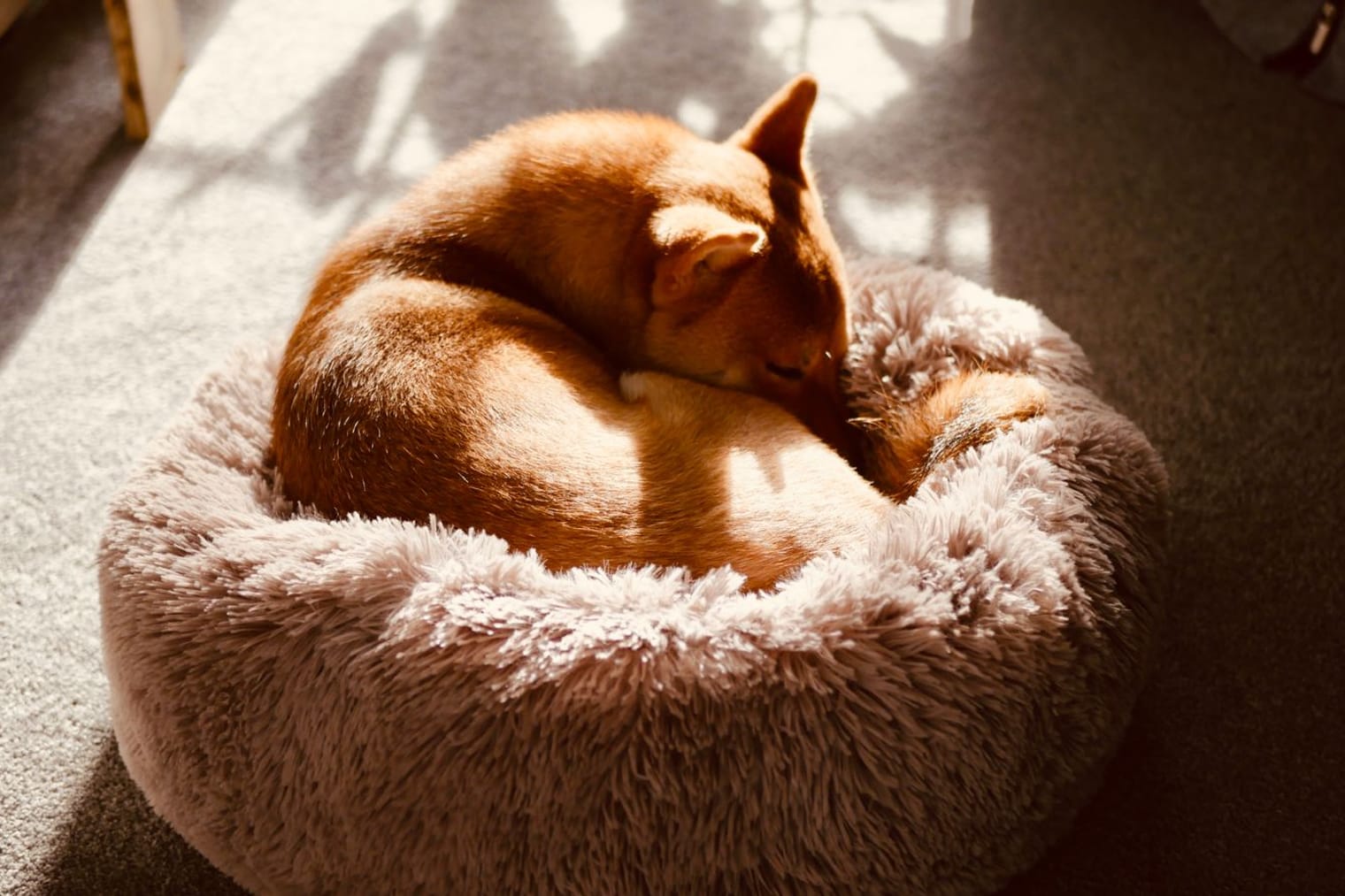
Naps are not optional
Young puppies need to nap roughly after every hour or so of being awake. A good rhythm is about an hour up, then a nap. If your puppy is getting over-tired, put them somewhere calm and quiet, a crate or covered bed works well, and let them switch off. Some puppies, again like toddlers, need help to stop and sleep. These enforced naps are one of the most effective things you can do for a puppy's behaviour.
Night sleep and broken nights
Do not expect a young puppy to sleep through at first. Their bladder is small, so they physically cannot last all night, and a new home is unsettling. For the first weeks:
- Keep the crate or bed near you at night so they feel safe and you can hear them.
- When they wake, take them out for a quiet, boring toilet trip, no play or chat, then straight back to bed.
- Most puppies start sleeping through by around four to six months, as their bladder grows and the routine settles.
Our guides on toilet training and crate training cover the night-time routine.
How to help them settle
- Keep a routine. Predictable meal, play, toilet and sleep times help a puppy wind down.
- Have a calm wind-down. Avoid rough play or excitement right before sleep.
- Give them a consistent spot. A cosy, den-like bed they come to associate with rest.
- Do not turn night waking into play. Keep the lights low and the fuss to a minimum.
When to check with your vet
Sleeping a lot is completely normal for a healthy puppy. Speak to your vet if you notice a clear change: a puppy who is suddenly much more lethargic and hard to wake, or one who cannot rest and seems restless or uncomfortable, especially alongside other signs like going off their food, an upset stomach or low mood. Normal broken nights are not a worry. A sudden, marked change in how they sleep is worth a call.
Not sure they are getting enough? Vivlo lets you log sleep and naps and see your puppy's daily rhythm, so you can spot the over-tired pattern before the evening meltdown. Ask Pip can talk you through a nap routine for their age. It is friendly general guidance, never a substitute for your vet.
See how it worksCommon questions
How many hours a day should a puppy sleep?
A lot. Young puppies of 8 to 12 weeks need around 18 to 20 hours of sleep a day. This drops slowly with age, to about 16 to 18 hours at 3 to 6 months, and roughly 12 to 14 hours as an adult. Long stretches awake are not healthy for a young puppy.
Why is my puppy so hyper and bitey in the evening?
Usually because they are over-tired, not under-exercised. A puppy who misses sleep gets wired rather than sleepy: zooming about, biting harder and unable to settle, much like an over-tired toddler. The fix is not more play but a calm nap in a quiet spot.
When will my puppy sleep through the night?
Most puppies start sleeping through at around four to six months, once their bladder is bigger and the routine has settled. Before that, broken nights are normal because a young puppy physically cannot hold their bladder all night. Keep night toilet trips calm and boring, and it improves.
Should I wake a sleeping puppy?
Generally, let a sleeping puppy sleep, they need every hour. The exception is a very long daytime sleep that would leave them wide awake at night, or a scheduled toilet trip for a very young puppy. Otherwise, uninterrupted sleep is exactly what a growing puppy needs.
Where should my puppy sleep?
Somewhere calm, cosy and den-like, such as a crate or covered bed. For the first week or two, keep it near your own bed at night so your puppy feels safe and you can hear when they need the toilet. A consistent spot they associate with rest helps them settle.
Is it normal for a puppy to sleep most of the day?
Yes. A healthy puppy sleeping 18 to 20 hours a day, in short bursts, is completely normal and important for their growth and development. It only becomes a concern if it changes suddenly, for example a puppy who is much more lethargic and hard to wake, especially with other signs of being unwell.